
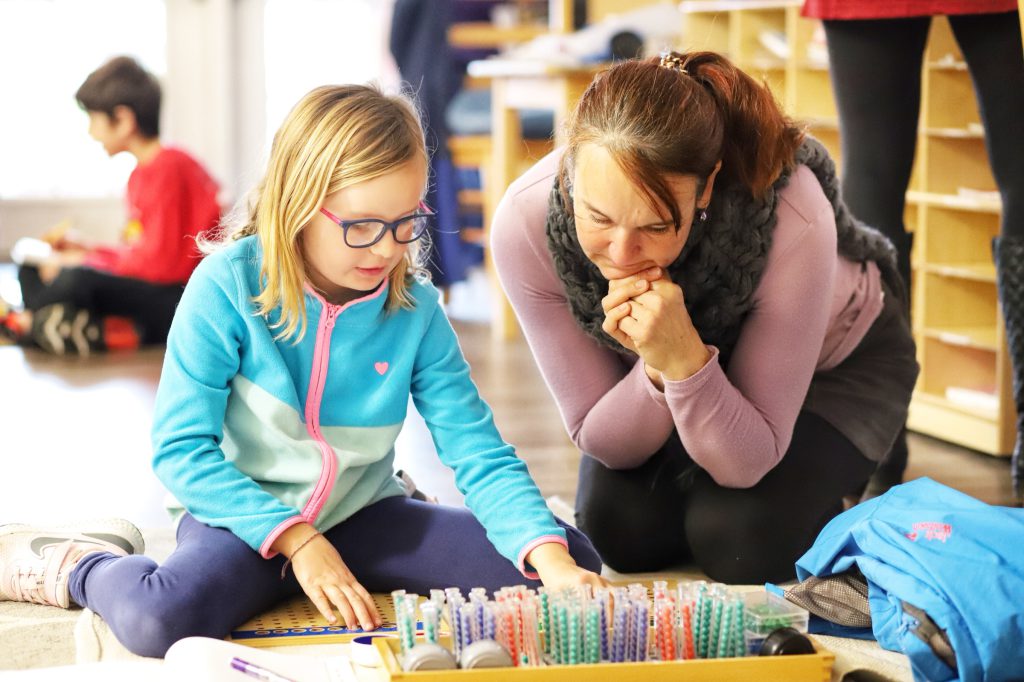
Our curriculum connects academic subjects to one another and to the wider world, so students grow into thoughtful world citizens. Teachers build the skills of asking questions and finding answers, and students stay eager to learn because they can find answers for themselves.
Along with that comes freedom to explore, within clear limits. Students follow the ideas that truly interest them.
History and Values
Who was Maria Montessori?
Dr. Maria Montessori was a physician, educator, philosopher and humanitarian. Her work, begun more than a century ago, has inspired educators around the world to create calm, orderly classrooms. There, students grow in independence and confidence, and learn to treat one another with respect and grace.
She believed that careful observation of the child shows what education should be. Learning that grows from the child’s own needs stays with them for life.
Today the Montessori Method thrives in thousands of schools worldwide. Each school has its own character, but every authentic Montessori school shares these core values.
- Children are intrinsically motivated and succeed when their learning activities incorporate movement and opportunities for independence
- Children become self-disciplined when empowered to choose learning activities designed for specific developmental and learning needs.
- Each classroom strives to be a respectful community of multi-age learners
- Classrooms and other areas on campus are learning environments prepared with curriculum and materials
- Teachers are educated and certified Montessori teachers.
- Parents understand and support the purposes of the school; they are partners.
Excerpts of this page are from The Authentic American Montessori School: A Guide to the Self-Study, Evaluation, and Accreditation of American Montessori Schools Committed to Montessori Education by Dr. Nancy Rambush and Dr. John Stoops.
Explore Montessori Method

Planes of Development
Students do not grow in a straight line. Dr. Montessori mapped four planes of development, and each one shapes how we teach.

Three-Year Cycle
Some things take more than a year to learn well. Over three years, students go deep and study every continent along the way.
Multi-Age Classrooms
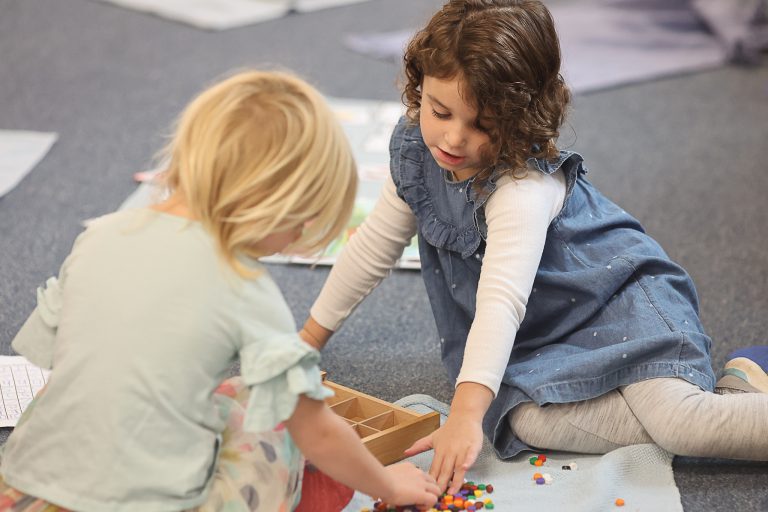
Older students teach. Younger students reach higher. In a mixed-age classroom, everyone gets a turn at both.

Grace & Courtesy
Courtesy is a subject here. Students practice shaking hands, greeting a visitor and saying peacefully that something hurt.
Work Cycle
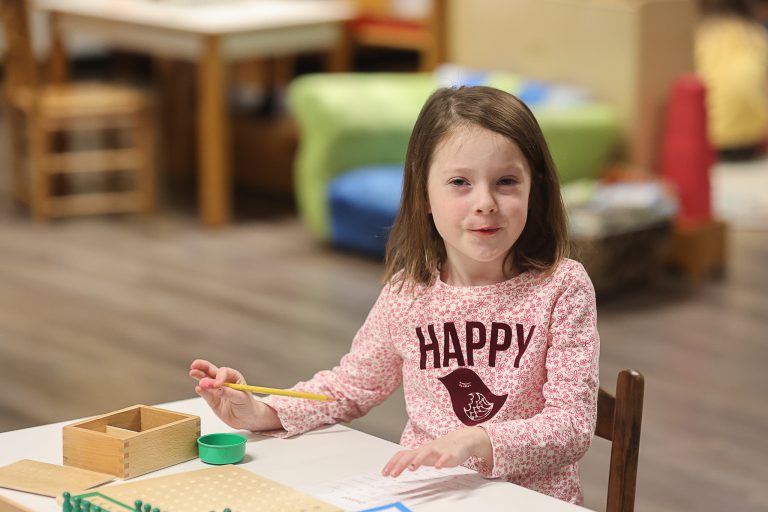
Deep focus takes time, so we protect it. Every day, at every level, students choose their work and stay with it, uninterrupted.
Spiral Curriculum
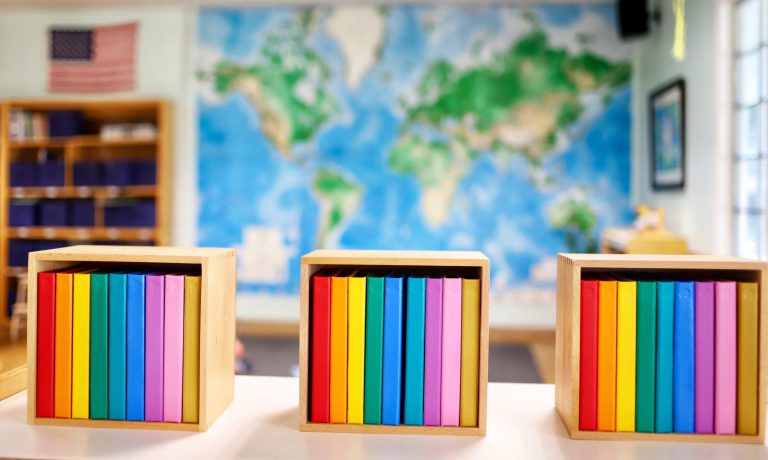
Every subject comes back around, wider and deeper each time. Students return to what they know, ready to understand more.
Suggested Reading
A shelf for curious parents, from the science behind Montessori to why students need the woods.