
As we close this year, I want to thank you for making the 2018-2019 academic year such a memorable year at Five Oaks Academy. Your commitment to excellence and to the partnership between parent and school/student has brought forth continued growth.
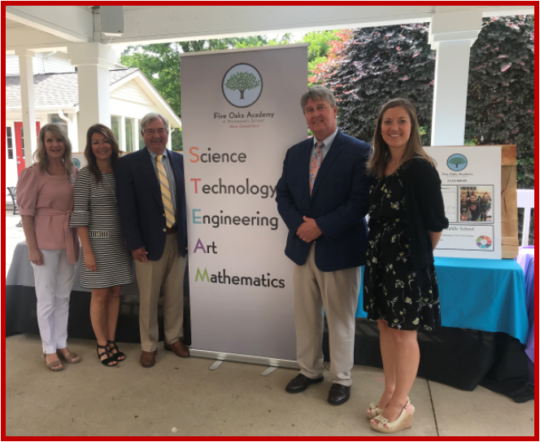
In May we earned our STEAM accreditation and received the following comments from SCISA’s Dr. Spencer Jordan. “Five Oaks Academy is an excellent example of a school taking advantage of SCISA Professional Development to meet desired outcomes. The faculty and students were very good ambassadors for the school and expressed notable enthusiasm and engagement. The STEAM program developed by the administration and staff is exemplary and more than meets the SCISA requirements of STEAM Certification.
SCISA’s committee acknowledges the following Powerful Practices:
1. Vertical Alignment throughout the school for the STEAM
program is impressive
2. Practical life applications were integrated into the initiative
3. Complete buy-in by faculty
4. Adequate funding for the program was evident
5. Built-in staff meetings and collaborative design were impressive as they relate to the STEAM initiative
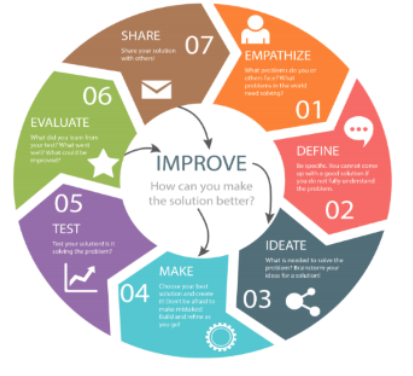
SCISA commends the outstanding work of the Five Oaks staff in developing the STEAM curriculum. SCISA Executive Director, Dr. Spencer Jordan, and former SCISA Executive Director, Mr. Larry Watt, gave a glowing evaluation of their on-site accreditation visit of Five Oaks Academy. They said they were “speechless” because this was the best on-site visit for STEAM accreditation that they have had in the entire state. They went on to say that by adding empathy to our design process, it sets us apart from other programs. This empathy connects students to real-world applications and makes the design process more meaningful. Some of our students and lead teachers were interviewed for the evaluation and there was an extensive review of all classroom practices for STEAM.
Thank you to the students who participated in our Raise Craze fundraiser. Funds raised for their acts of kindness allow each classroom to purchase STEAM materials that furthered the cause!
Please enjoy your summer and if you are returning, we will be looking forward to seeing you in August! If this is your final year at FOA, please know you will always be a part of our community.
With much gratitude and Happy Summer!
Ms. Kathleen


 We all want our children to be successful but what exactly does that mean and how do we guide our children towards success? Humans generally feel successful when they know they excel at something. Certified Gallup Strengths Coaches Chandra White and Renee Anderson from WellSmart Solutions recently spoke to the FOA community on the topic of “Strengths”. They provided us with insight on how parents can start on the journey to guiding their children in discovering and developing their unique strengths while focusing on their own as well.
 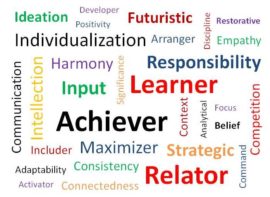 Chandra and Renee began their session with the definition of talent and the relationship between talent and strengths. They explained that talents are naturally recurring patterns of thought, feeling or behavior. Strengths are simply talents that are developed and can be productively applied. It is our job as parents to help our children “lean into” and develop their natural talents so they become strengths, thus leading them towards excellence or success. They stressed that while guiding your child toward success you want to look at what is right, not wrong, with them. This starts with recognizing your child’s unique talents and simultaneously letting go of pushing them to be who they are not. Begin by noticing what they are naturally good at doing as well as what they gravitate towards automatically. Another indicator of a strength is when an activity leaves a child energized.
 Renee walked us through what it means to be mindful versus “mind full”. She emphasized how adding a mindful practice of only 8-10 minutes a day can help the mind by improving the working memory, focus, concentration as well as reducing anxiety and depression and the body by increasing energy, improved stamina, and reducing pain and inflammation. Yoga and meditation are two types of formal mindful practices that are beneficial. She also encouraged informal practices such as self-awarenesses where you are deliberately paying attention while driving, showering, or washing the dog.
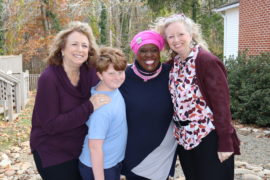
 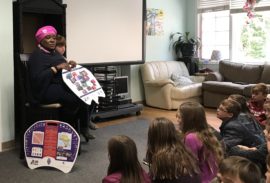 Five Oaks Academy was honored to welcome Thandi Tutu-Gxashe, CEO of Desmond Tutu Tutudesk Campaign “Tutudesk Campaign 2020”, on Monday, November 26. Ms. Tutu-Gxashe is the daughter of Desmond Tutu, a highly influential leader of the anti-apartheid movement in South Africa and a Nobel Peace Prize winner. She has lived, worked and been educated in the UK, Swaziland, Botswana and the USA. Ms. Tutu-Gxashe echoes her parent’s vision of equality and the importance of education. Her sincere, warm, and gentle nature instantly captivated her audience of FOA elementary and middle school students. She shared her passion for education and her drive to address the issue of the vast shortage of desks in sub-Saharan Africa. Our students were stunned to learn there are over 90 million students who had no hard surface to write on and who are literally working on the floor of a classroom or under a tree.
 The “Tutudesk Campaign 2020” aims to address the shortage of 90 million desks in sub-Saharan Africa, by providing 20 million Tutudesks to 20 million children by 2020. The Tutudesk is an environmentally friendly, light, portable desk that children can use at school or at home, in regular classrooms or under a tree. The organization’s goal is to improve the lives of African children, their communities and countries, and to make Africa a more globally competitive continent by impacting education and literacy. Ms. Tutu-Gxashe gifted FOA with 3 Tutudesks for our Five Oaks students to use. For more information and to make a donation, please visit